Tom Holert – Aesthetic “Force”? On the Weaponisation of Art
Lecture
Tom Holert – Aesthetic “Force”? On the Weaponisation of Art
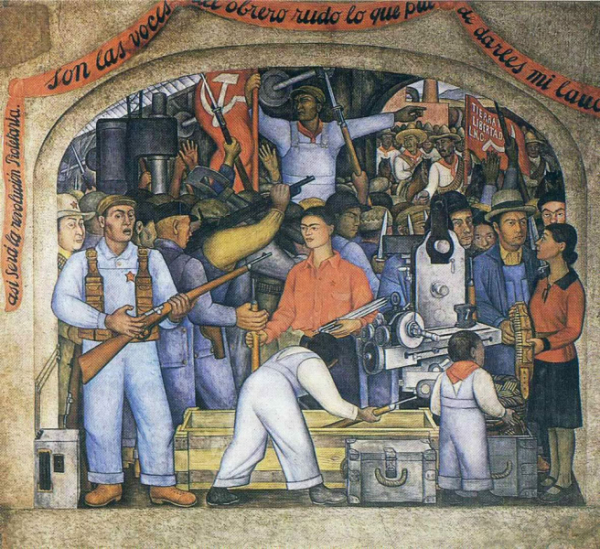
To characterise individual artworks or – art as such – as a “weapon” is not uncommon in modernity. Yet it remains exceptional enough to unsettle established beliefs about the role and nature of art, just as the enduring scandal of the reciprocity between violence and aesthetics has always done. As is well known, the avant-garde (or rather its theory) invokes a proximity to the military already in its very name. But how exactly should we understand the notion of art being addressed “as a weapon”? Integrating signals of political militancy into the discourse of art is one thing; a transformation – equally worth considering – of the conceptual and ontological foundations of art in moments of its “weaponisation” is quite another. Against the backdrop of current debates on the relationship between art and politics, the lecture will address the historical warpaths of art and its potential, contingent, and structural “force” (Max Weber).
Tom Holert (*1962) is an art historian, cultural theorist, and curator. In 2015, he co-founded the Harun Farocki Institut in Berlin. His book ca. 1972. Gewalt – Umwelt – Identität – Methode (ca. 1972. Violence – Environment – Identity – Method, Spector Books) received the Leipzig Book Fair Prize in 2024; together with Claudia Blümle and Katja Müller-Helle, he edited Bildformen des Rechts. Juridische Schauplätze technischer Bilder (Image Forms of Law: Juridical Sites of Technical Images, Bildwelten des Wissens 21, 2026); Kunst und Politik zur Einführung (Art and Politics: An Introduction, Junius) will be published in autumn 2026.
Introduction and moderation: Peter Geimer
You can also join the lecture via Zoom : https://maxweberstiftung.zoom-x.de/j/62308636372?pwd=4ARb0XFbqHcuoCaxoeCLI39VQoywBd.1
Meeting-ID: 623 0863 6372
Passcode: 265424
Associated Person